 Get Started


 Login
Login
 (877) 355-3585
 Chat
Chat Email
Email Help Desk

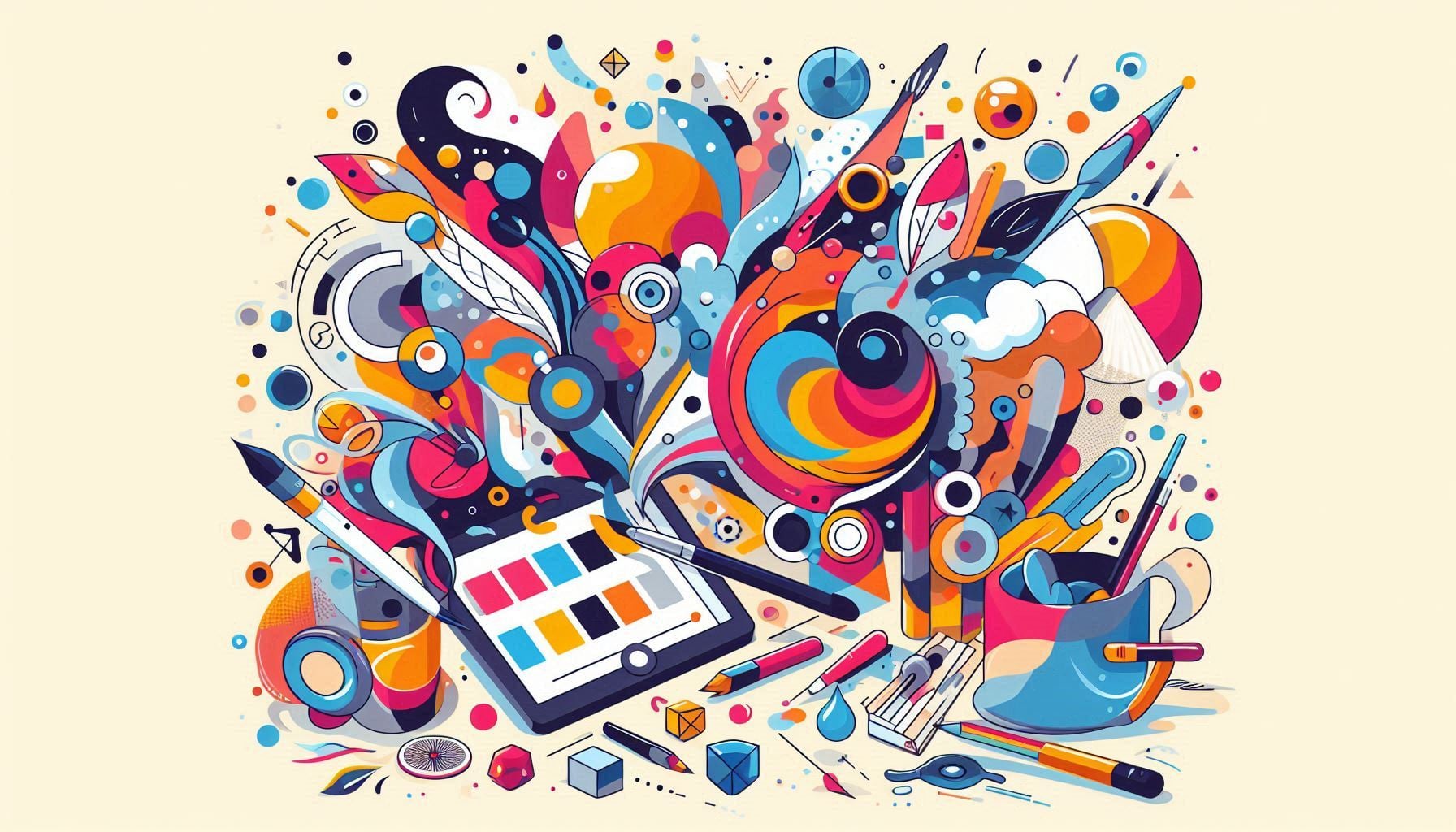
Welcome to the not-so-distant future, where generative AI isn’t just a trend, it’s a cornerstone of modern marketing. Whether you’re crafting snappy social captions or producing an entire video campaign, AI tools for content creation are now your creative co-pilots. In 2025, using AI for marketing isn’t optional; it’s pretty much professional survival.
This guide is your ultimate resource to navigate the AI for content creation world. You’ll discover essential tools, proven strategies, ethical considerations, and how to scale without selling your soul to the algorithm. Let’s plug in.
Why AI for Marketing Content Is Non-negotiable in 2025
The adoption of AI for marketing has accelerated dramatically. According to a 2024 report by the Content Marketing Institute, over 70% of marketers now use AI in some form for content creation and campaign management.
Here’s why AI for content creation is a game-changer:
1. Speed and efficiency. Repetitive tasks like caption writing or resizing visuals? Hand them off to AI. Use tools to streamline visual production, and AI copywriters to speed up blog drafts.
2. Hyper-personalization. Marketing AI tools help tailor content to individual segments without breaking a sweat. Think personalized email flows, dynamic landing pages, and targeted product descriptions which overall improves social media conversion.
3. Creative firepower. Hit a creative wall? AI tools offer a fresh take on visual storytelling that sparks new ideas.
4. Smarter strategies. AI helps make data digestible, so you can track what content is actually resonating and adapt in real-time.
Essential Marketing AI for Content Creation
Now, let’s explore essential marketing AI tools for content creation, from text and visual generators to video and audio production. These tools aren’t just about automation; they’re about enhancing every stage of your content workflow, making your marketing efforts more efficient and impactful.
Text Generation AI: Crafting Compelling Copy
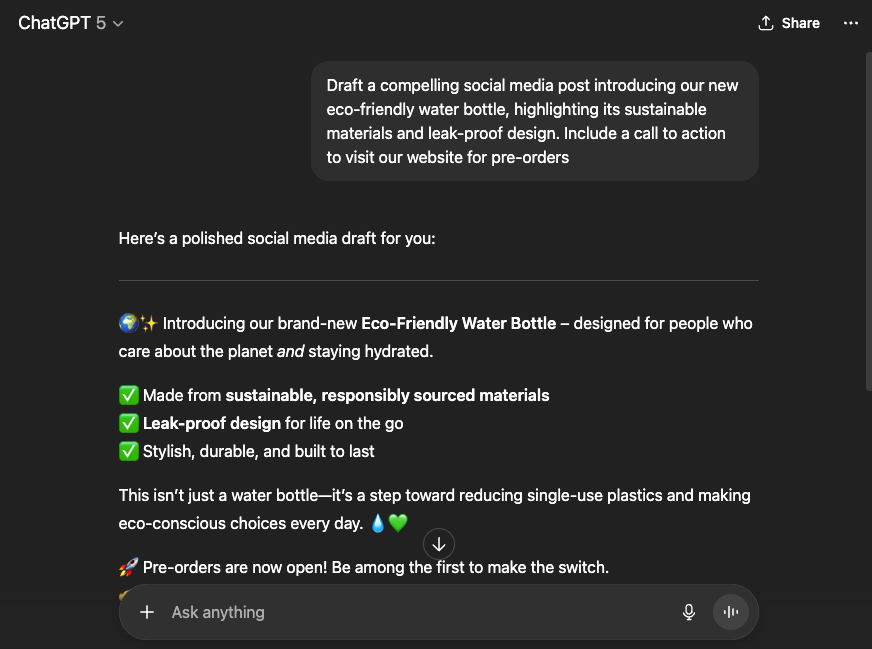
AI can help marketers overcome creative blocks and accelerate content production. Learning how to create with AI enable teams to quickly generate campaign ideas, draft copy, and explore new creative directions from simple prompts while maintaining their brand voice. Writing still matters, but how we write has changed. Tools like ChatGPT, Jasper, and Copy.ai generate snappy blog intros, killer CTAs, and polished email campaigns in minutes. For SEO? Surfer SEO and Semrush help structure posts around the keywords that count, while WriteWell rewrites your AI-generated draft into clean, natural, human-sounding content that actually matches your tone and passes both AI content detection and plagiarism checks.
Want to tie this into your brand strategy? Our guide to online branding helps ensure your AI-assisted messaging still feels distinctly like you.
Image and Visual Generation AI: Bringing Visuals to Life
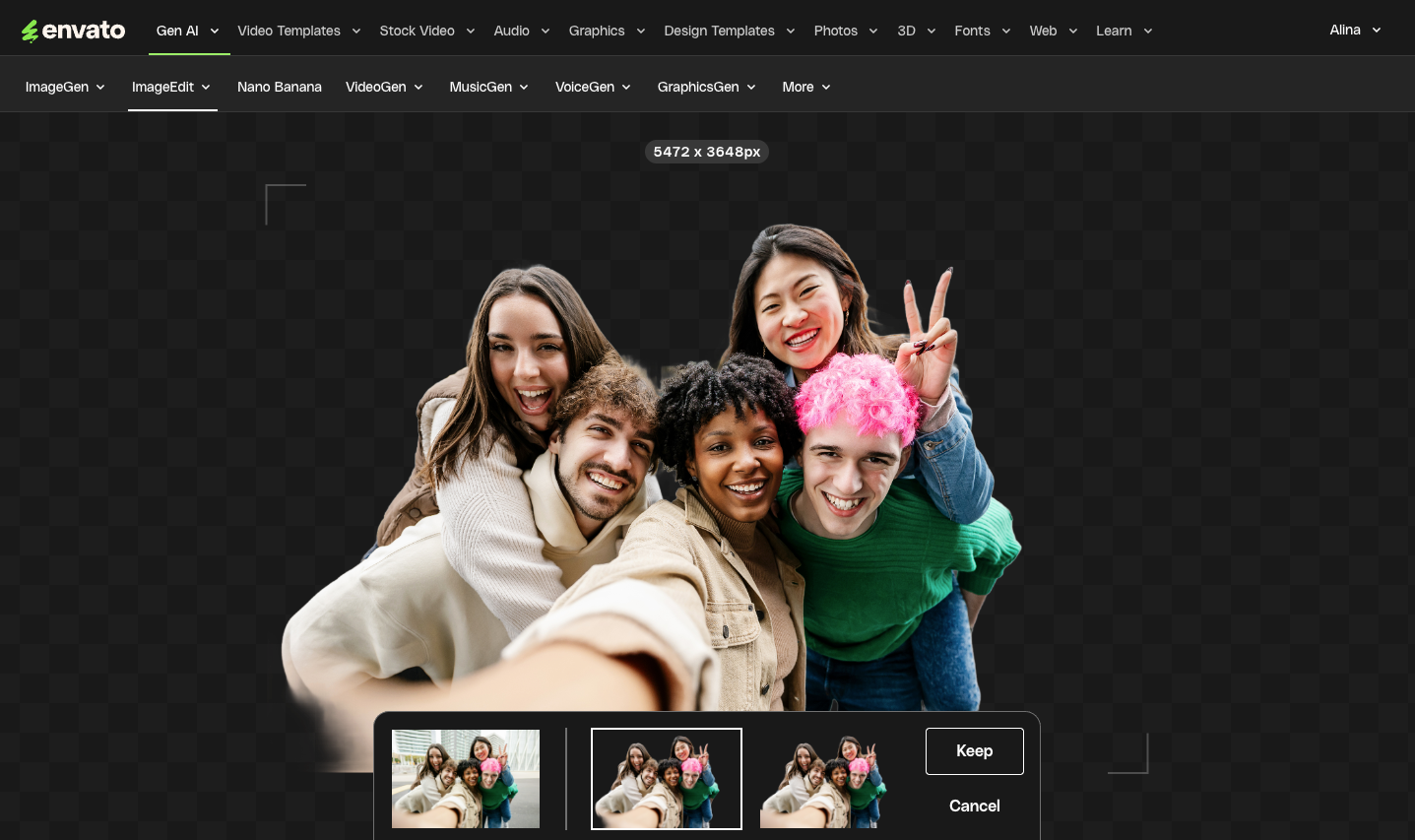
Midjourney and DALL-E 3 can create dreamlike images from a single sentence. Envato’s ImageGen takes it further by integrating with creative workflows, letting marketers prototype visuals at speed.
Video and Audio Generation AI: The Next Frontier
No camera? No problem. Synthesia and RunwayML generate professional-grade videos using text prompts. Envato’s VideoGen enables quick-turnaround video content that is ideal for product demos, testimonials, and social ads.
Add some spice with AI voiceovers and sound tools that turn scripts into studio-quality narration.
Content Planning and Strategy AI tools: Streamlining your Workflow
From Notion AI to MarketMuse, planning content is now less whiteboard chaos and more algorithmic insight. These tools help:
- Discover trending topics
- Manage editorial calendars
- Align content to SEO opportunities
Pair this with creative branding to ensure strategy matches execution.
Strategic Approaches to AI Tools for Content Creation
To maximize the potential of AI in marketing, it’s essential to adopt strategic approaches that blend technological capabilities with human ingenuity. Let’s delve into practical methods for leveraging AI tools effectively, focusing on collaboration, prompt optimization, brand consistency, and scalable production.
Human-AI Collaboration: The “Centaur” Model
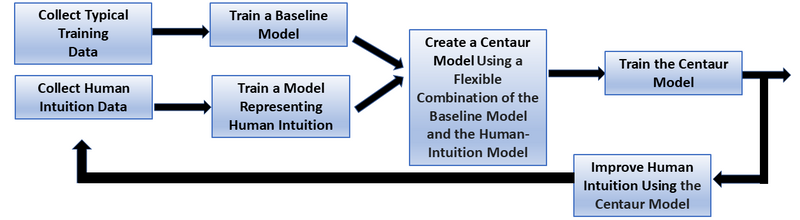
Image source: Harvard Data Science Review
The best results happen when humans and AI work together. You bring the emotional intelligence, AI tools bring the horsepower. Think of it as tag-team wrestling: you strategize, AI body-slams your to-do list.
Prompt Engineering Best Practices
Want better outputs? Write better prompts. Use clear context, specific instructions, and set tone or length. AI outputs are only as good as the prompts. To get the best results, apply these principles:
- Provide clear context: Before generating any content, clearly define the “who, what, where, when, why, and how.” This means specifying:
- Audience: Who are you trying to reach? What are their demographics, interests, and pain points? Understanding your audience helps the AI tailor its language and messaging.
- Tone: What emotional feel should the content convey? Is it informative, persuasive, humorous, serious, empathetic, or inspiring? Consistency in tone is vital for brand identity.
- Format: What is the desired output structure? Is it a blog post, social media update, email subject line, video script, headline, product description, or something else? Specifying the format helps the AI structure the content appropriately.
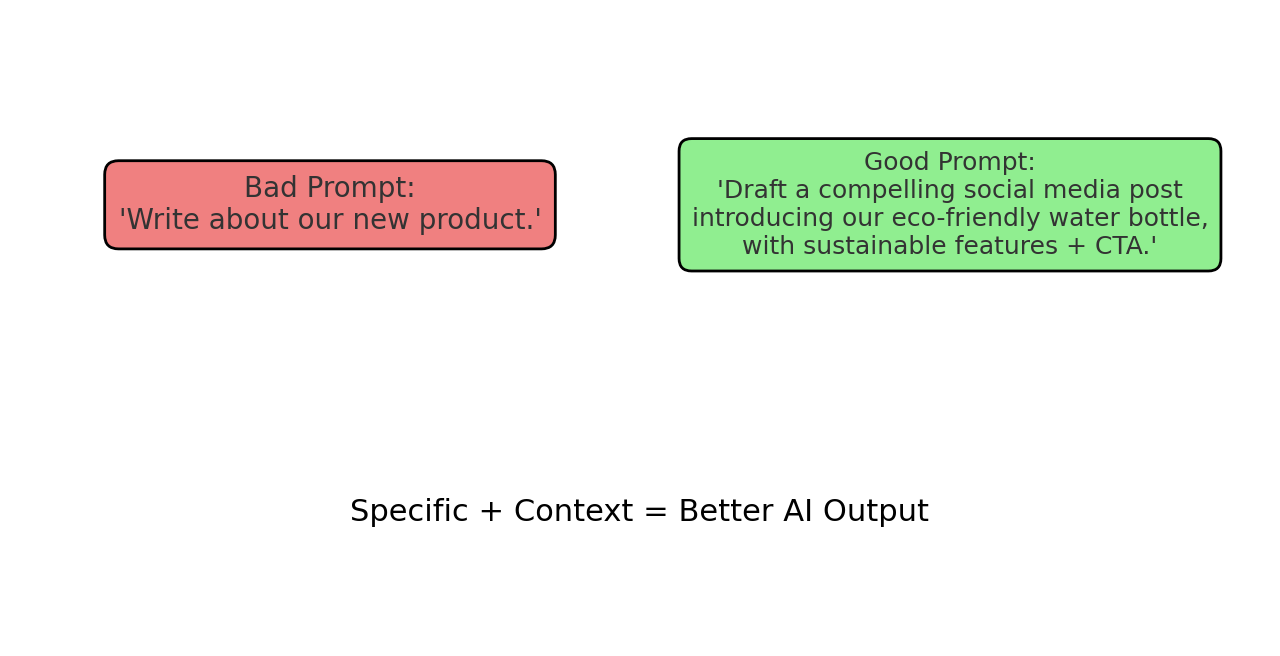
- Be specific: Vague instructions lead to generic results. Instead of broad directives, use detailed instructions to guide the AI towards your desired outcome. For example, instead of “Write about our new product,” consider: “Draft a compelling social media post introducing our new eco-friendly water bottle, highlighting its sustainable materials and leak-proof design. Include a call to action to visit our website for pre-orders.” The more granular your instructions, the better the AI can understand and fulfill your request.
- Set constraints: Defining boundaries helps the AI focus its creativity and ensures the output meets your practical requirements. Constraints can include:
- Length: Specify word count, character count, or paragraph limits. This is particularly important for platforms with strict content limitations, such as social media.
- Keywords: Provide a list of essential keywords or phrases that must be included in the content. This is crucial for search engine optimization (SEO) and ensuring brand messaging consistency.
- Style: Define specific stylistic elements, such as using active voice, avoiding jargon, maintaining a conversational flow, or adhering to a particular brand style guide. You might even provide examples of content that embodies the desired style.
Maintaining Brand Voice and Authenticity
Train AI tools with past content, style guides, or reference pieces to ensure consistency. Combine this with strategic brand color palettes to build a holistic identity.
As AI-generated content becomes a standard part of modern marketing, many teams also use an AI detector to review drafts before publishing. It helps identify machine-generated patterns, refine content where needed, and maintain originality while ensuring AI-assisted content aligns with brand and editorial standards.
Scaling Content Production without Sacrificing Quality
Use batch creation techniques to generate content themes and prompt AI to produce variations. Edit manually to keep quality high. AI helps you produce more, but you’re still the final gatekeeper.
Challenges and Ethical Considerations
Despite the undeniable advantages, integrating AI into your marketing workflow isn’t without its hurdles. Understanding these potential pitfalls is crucial for responsible and effective deployment. Working with a custom AI development company can help address these challenges by keeping systems transparent, compliant, and aligned with organizational needs.
- Bias: AI models reflect the data they’re trained on. Biases in, biases out. Always review.
- Originality: Use AI as a starting point, not the finish line. Run plagiarism checks.
- Data privacy: Don’t input sensitive info. Use secure, compliant platforms.
- Human oversight: Fact-check everything. AI makes stuff up sometimes.
What’s Next for GenAI in Marketing?
The future of AI in marketing will include hyper-personalized campaigns, real-time content adaptation, and interactive formats like AI-generated avatars. According to HubSpot, over 60% of marketers plan to increase investment in AI content creation tools by 2026.
The AI glow-up isn’t over. Expect:
- More personalization: Think predictive product suggestions and real-time content adjustments.
- New formats: Interactive AI content, personalized video avatars, and live-generated web experiences.
- Smarter models: AI that understands brand nuance, user intent, and emotional tone.
Action Plan: How to Implement AI for Marketing in Your Team
Step 1: Identify use cases. Decide whether you need AI for content creation, analytics, or personalization.
Step 2: Choose the right tools. Experiment with both free and premium marketing AI tools.
Step 3: Train your team. Offer workshops on prompt engineering and AI ethics.
Step 4: Start small. Pilot a campaign before scaling company-wide.
Step 5: Monitor and optimize. Track results and refine AI-human workflows.
Embrace GenAI to lead in 2025 and beyond
GenAI isn’t here to take your job — it’s here to amplify your creativity. Use it strategically, stay ethical, and don’t lose your human touch. This is your year to market smarter, not harder.
FAQs
What is GenAI and how is it different from traditional AI?
GenAI creates original content (text, images, video) based on prompts, whereas traditional AI is more analytical or rules-based.
What are the best AI tools for marketing in 2025?
ChatGPT, Jasper, Midjourney, Envato VideoGen, ImageGen, Synthesia, and Surfer SEO are top picks.
How can I use AI for content creation without losing my brand voice?
Use prompt engineering, brand style guides, and human editing to align AI output with your tone.
Is AI-generated content good for SEO?
Yes, but if it’s high-quality, original, and meets search intent. Use tools like Semrush to guide structure.
What are the risks of using AI in marketing?
Bias, inaccuracy, plagiarism, and over-reliance. Always review and edit AI-generated content before publishing.