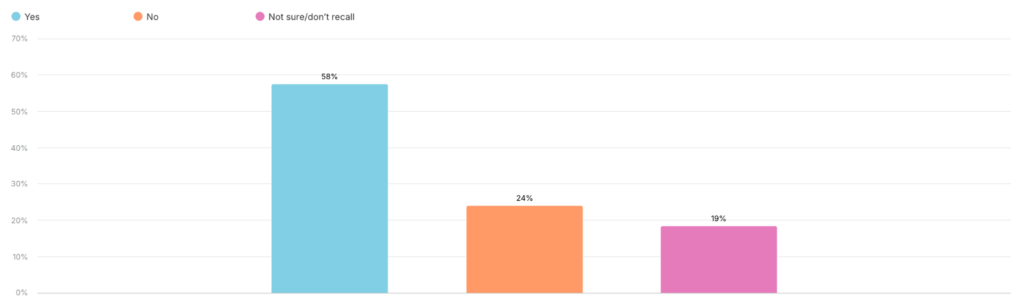
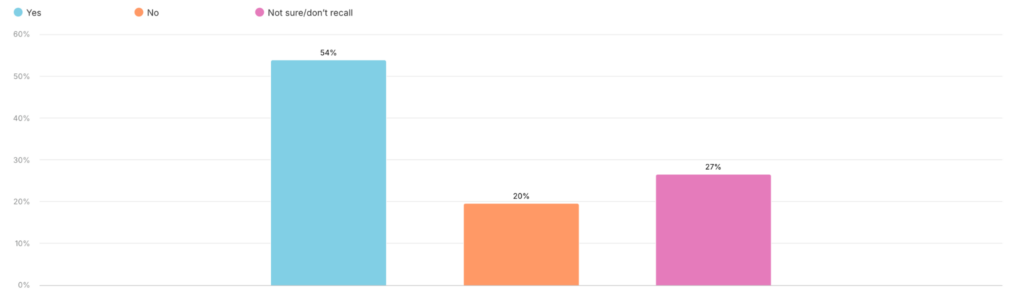
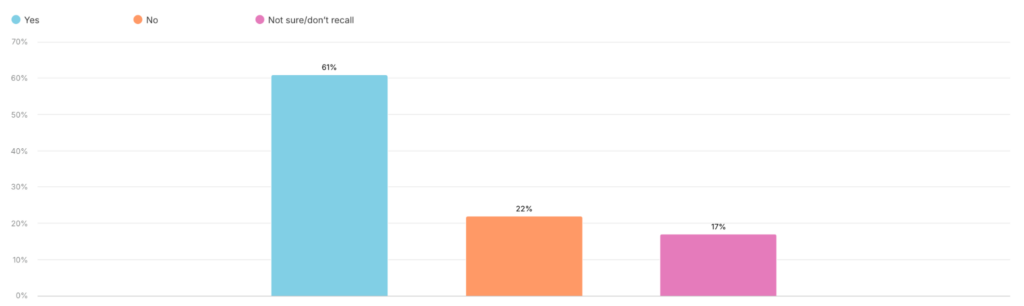
58% of consumers have failed to find a brand online because of domain weaknesses
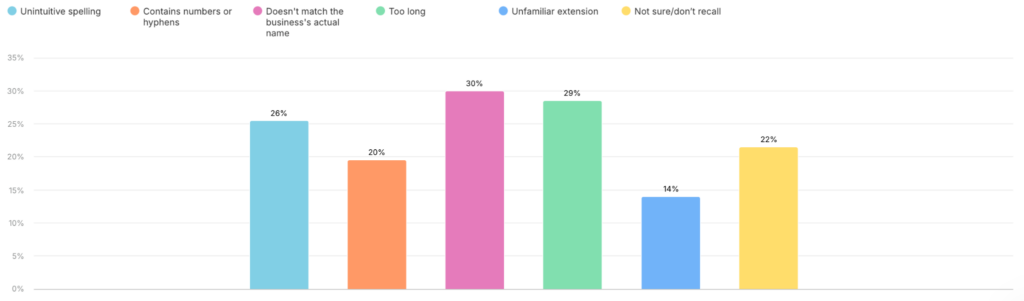
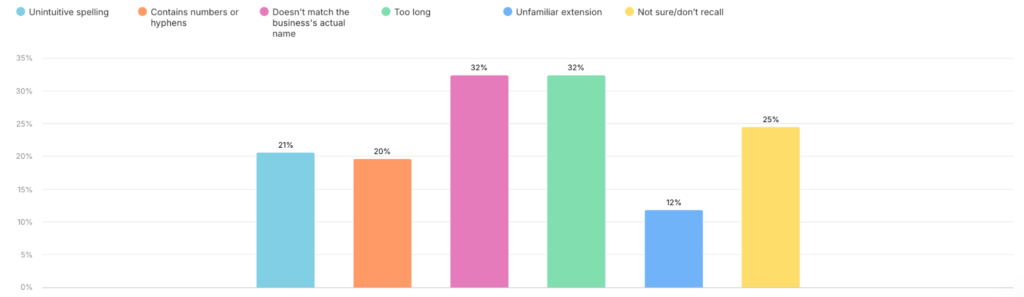
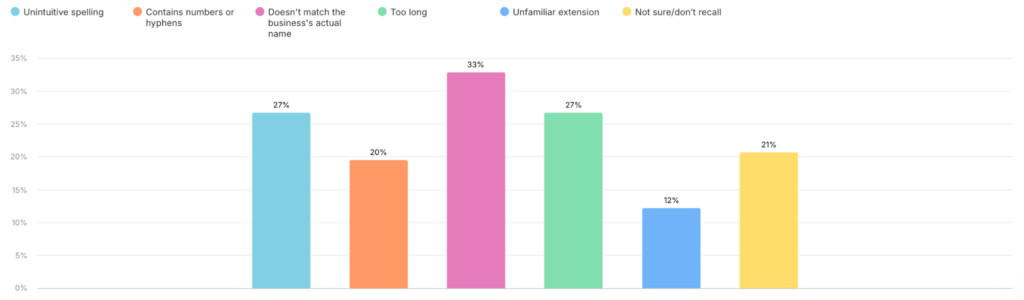
Non-exact match domains are a big problem (30%), while length and spelling are also key barriers to domain memorability.
Unfamiliar extensions account for a minority of domain discovery issues, suggesting alternative extensions paired with strong names are a way forward for brands
Objective and Methodology:
Memorability and spelling are two key criteria that come hand in hand for brand names and domains, and have a significant impact on how consumers find you online. Despite their importance, both trademark concerns as well as domain scarcity place competing pressures on brands choosing a domain name, as longer domains or those with alternative spellings may be more available or affordable.
To explore the significance of memorability and spelling, we asked consumers about their experience finding brands online. We used this question to qualify respondents who have struggled to find brands online for a follow-up question asking what impacts memorability in a domain.
Question:
Question one: Have you ever failed to find or reach a business online because its domain name was hard to spell or remember?
Yes
No
Not sure/don’t recall
Question two: What made the domain hard to find or remember? (Select all that apply)
Unusual/alternative spelling
Contains numbers or hyphens
Doesn’t match the business’s actual name
Too long
Unfamiliar extension
Not sure/don’t recall
Audience:
A representative panel of American consumers aged 18 – 64.
Overall Results
58% of consumers have failed to find a brand online because of domain weaknesses
Non-exact match domains are a big problem (30%), while length and spelling are also key barriers to domain memorability.
Unfamiliar extensions account for a minority of domain discovery issues, suggesting alternative extensions paired with strong names are a way forward for brands
Have you ever failed to find or reach a business online because its domain name was hard to spell or remember?
What made the domain hard to find or remember? (Select all that apply)
Gender Breakdown
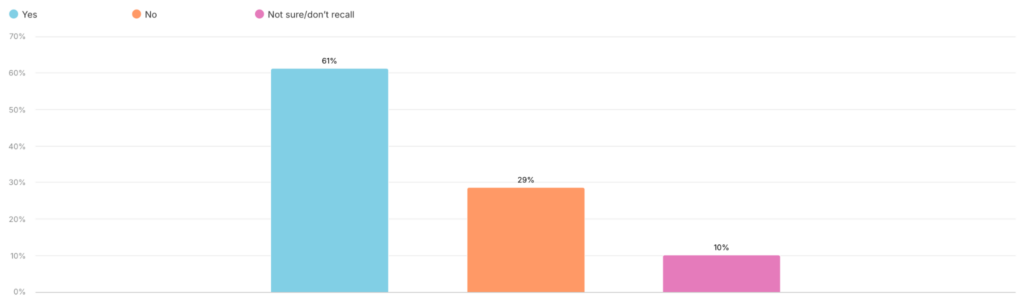
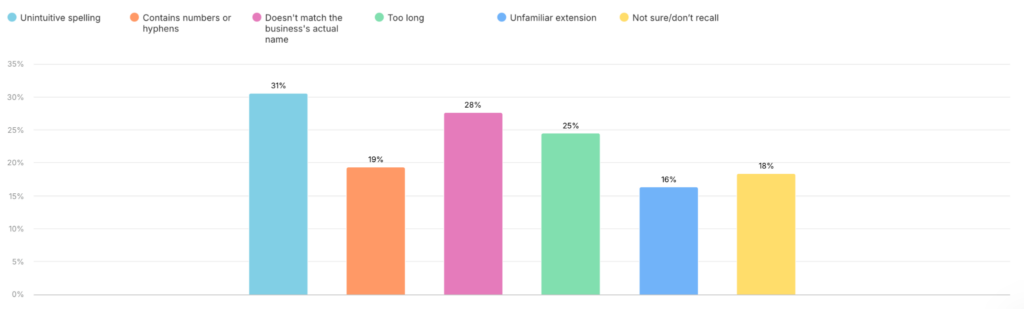
Men (31%) say that intuitive spelling impacts discovery more than women (21%)
Women (32%) are more likely to forget longer domains than men (25%)
Men
Have you ever failed to find or reach a business online because its domain name was hard to spell or remember?
What made the domain hard to find or remember? (Select all that apply)
Women
Have you ever failed to find or reach a business online because its domain name was hard to spell or remember?
What made the domain hard to find or remember? (Select all that apply)
Age Breakdown
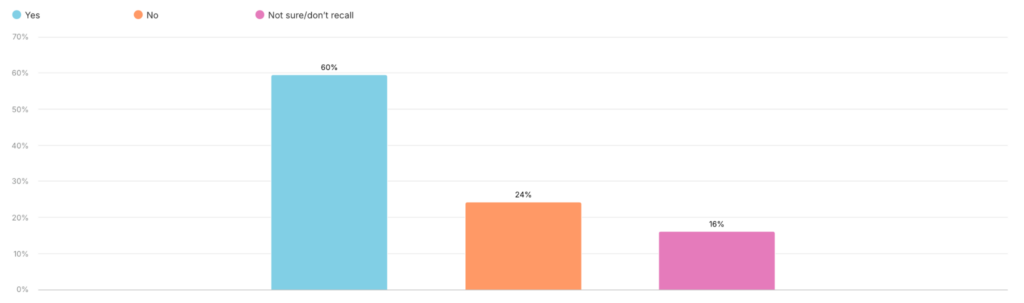
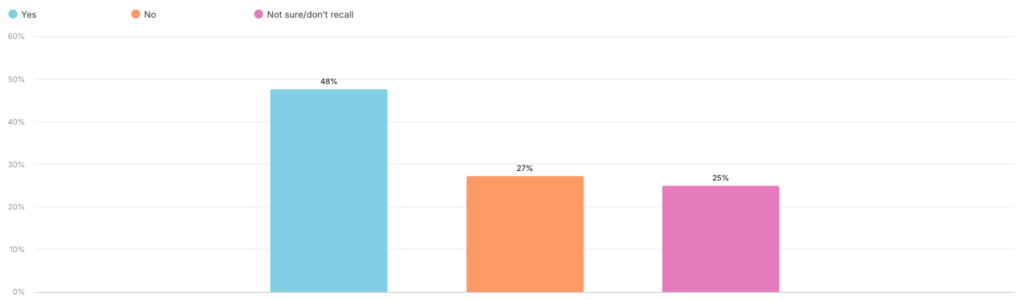
Younger consumers (60%) are more likely to report failing to find a domain than over 55s (48%)
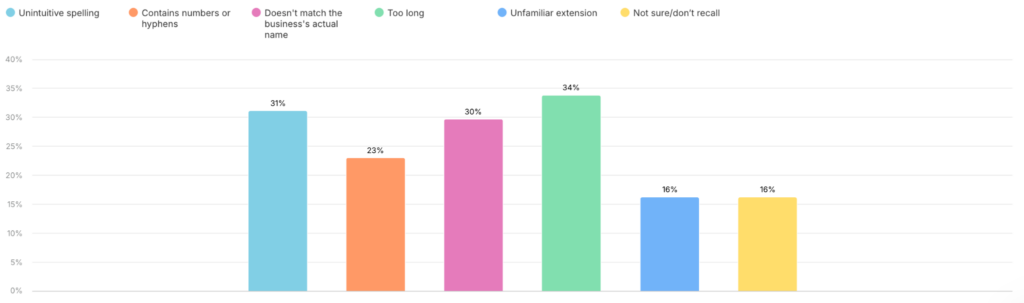
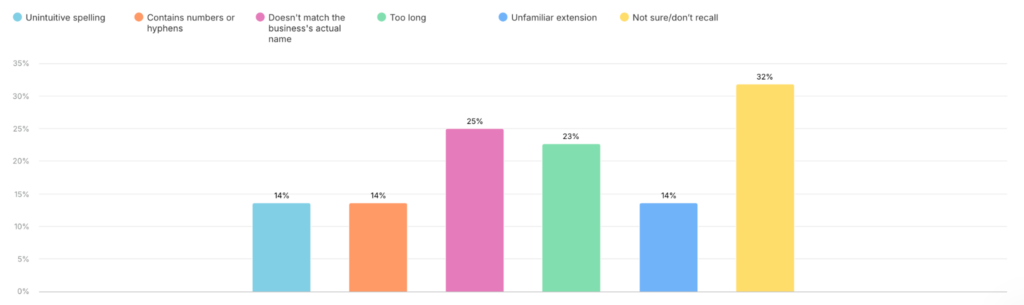
Length (34%) and spelling (31%) are most impactful for younger consumers
18 – 34
Have you ever failed to find or reach a business online because its domain name was hard to spell or remember?
What made the domain hard to find or remember? (Select all that apply)
35 – 54
Have you ever failed to find or reach a business online because its domain name was hard to spell or remember?
What made the domain hard to find or remember? (Select all that apply)
55 – 64
Have you ever failed to find or reach a business online because its domain name was hard to spell or remember?
What made the domain hard to find or remember? (Select all that apply)
Conclusion
Overall, our findings suggest that a clear, memorable domain is still a critical part of brand discoverability. Exact-match domains provide a significant advantage for brands, while prioritising short domains and intuitive spelling make brands most memorable and discoverable online. Crucially, alternative or unfamiliar extensions were not a strong factor for discoverability. This implies that strategic use of alternative extensions, particularly those familiar to your audience, can mitigate potential drawbacks by enabling brands to choose short, intuitive, and easy-to-spell names that consumers can readily recall.
If you’re interested in digging deeper into our findings, or asking your own questions on domain choice and branding topics, contact thom@atomradar.com to learn more.
Business investors, including VCs and private equity investors, are key stakeholders in early-stage startups, and demonstrating strength and ambition to...
Key takeaways: Objective: For both immediate impact and long-term memorability, single-English word domains have long been considered a benchmark for...