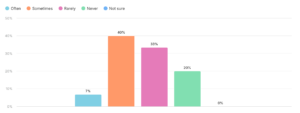
76% of consumers have been confused when they find two or more businesses operating under the same name.
One in ten say this happens often.
Objective: Businesses often compromise on a name that’s unique in their industry, knowing that this criteria is enough for differentiation and trademarking. However, as consumers shop online, and search results may not understand the searcher’s industry intent, target audiences are increasingly presented with multiple options for brands sharing the same name. We sought to understand the impact on customer habits when two or more brands share one name.
Question: Have you ever been confused by two or more businesses sharing the same name when searching for a product or service?
Often
Sometimes
Rarely
Never
Not sure
Audience: A representative panel of American consumers aged 18 – 64.
Overall Results
Have you ever been confused by two or more businesses sharing the same name when searching for a product or service?
Conclusion
Finding a unique name is challenging in today’s market, but comes with obvious advantages. Given that most consumers now search for brands online, it’s no longer enough to stand out in your industry: a name that carves out a completely unique brand identity will build a stronger connection with customers.
If you’re interested in digging deeper into our findings, or asking your own questions on consumer, branding and worklife topics, contact thom@atomradar.com to learn more.
Want personalized insights?
Run your own brand surveys and more with AtomRadar. Our data can power your brand development.
Key takeaways: Objective: For both immediate impact and long-term memorability, single-English word domains have long been considered a benchmark for...