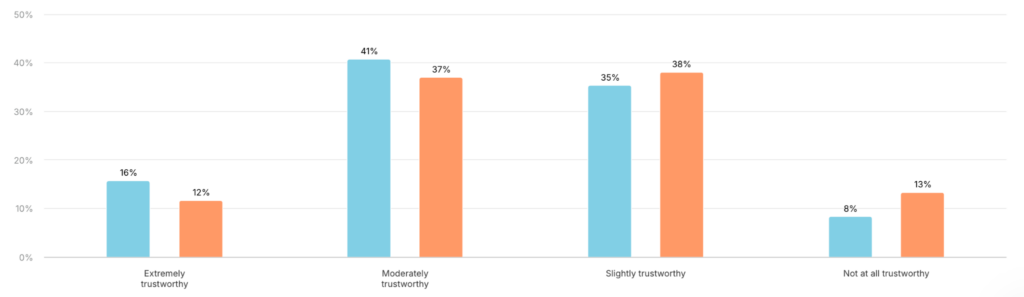
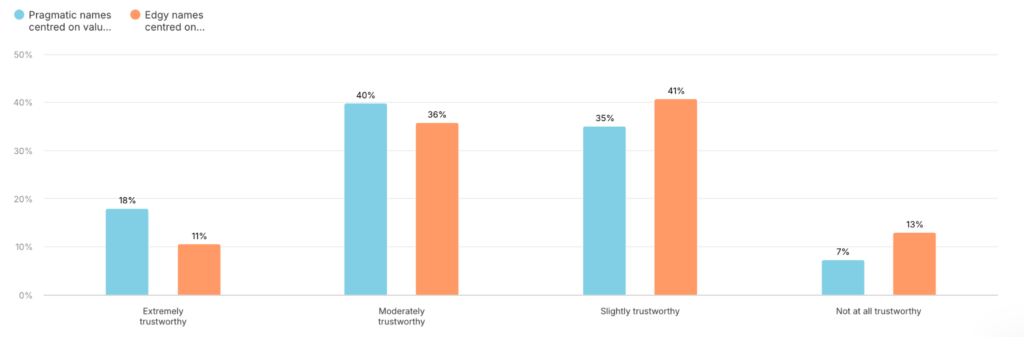
Pragmatic names have the edge on trust: 16% say they’re extremely trustworthy, 41% say moderately trustworthy.
13% say edgy names are not at all trustworthy: edgy brands must work harder on trust.
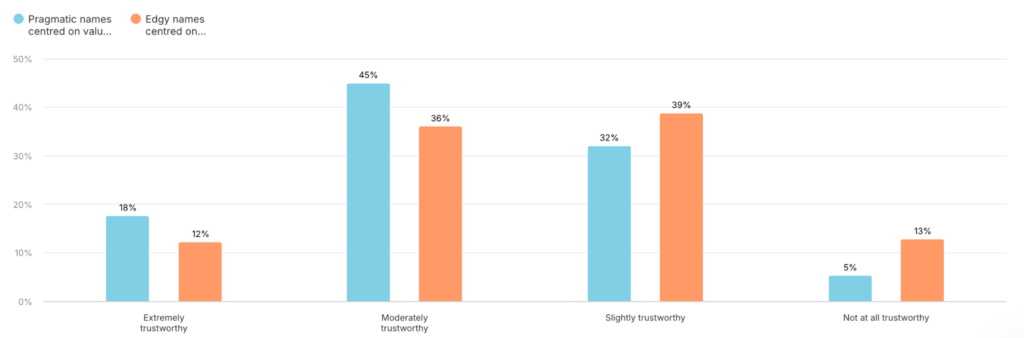
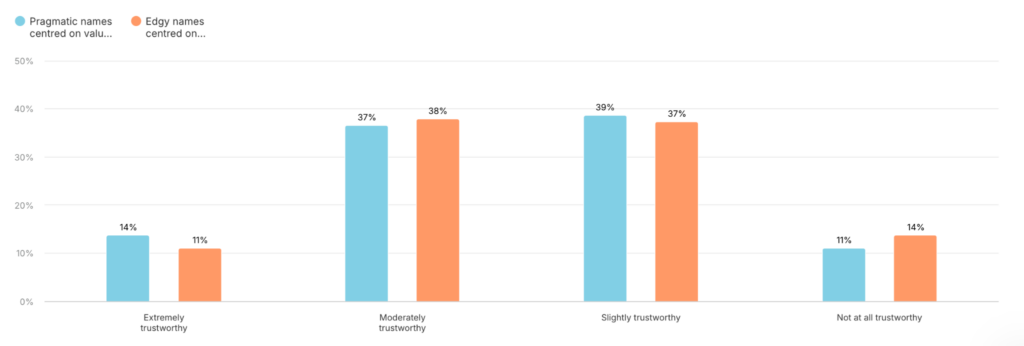
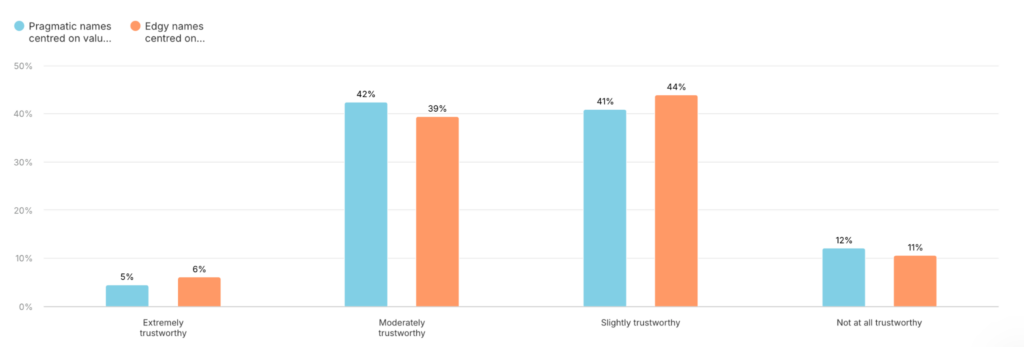
63% of men vs. 51% of women say pragmatic names are extremely or moderately trustworthy
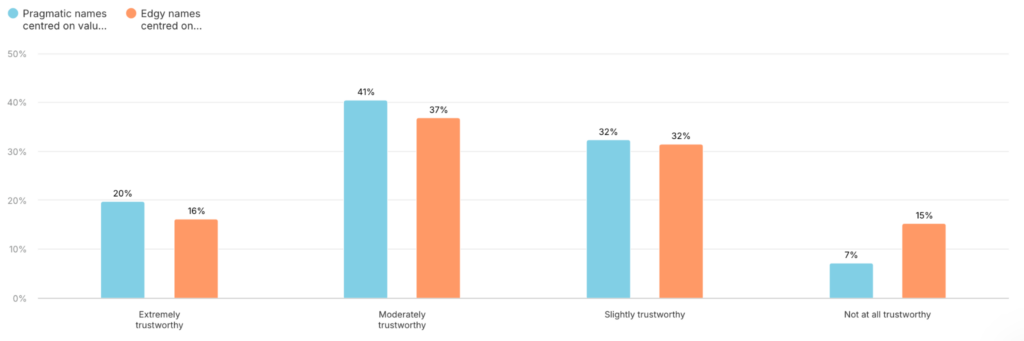
20% of 18 – 34s say pragmatic names are extremely trustworthy: more than any other demographic.
Trust is harder won with older consumers
Objective: Brand names play a critical role in shaping first impressions. This research aims to understand how different naming styles — pragmatic, value-led names versus edgy, positioning-led names — influence consumer trust at first encounter, and how these perceptions vary across demographic groups.
Question:
When thinking of your first encounter with a brand, how trustworthy do you perceive brands with the following brand-name styles?
Name types surveyed:
Pragmatic names centred on values (e.g., FinancialLogic, SpeedNotion)
Edgy names centred on positioning (e.g., SalesZap, BoltBoost)
Extremely trustworthy
Moderately trustworthy
Slightly trustworthy
Not at all trustworthy
Audience:
A representative panel of American consumers aged 18 – 64.
Overall Results
Pragmatic names have the edge on trust: 16% say they’re extremely trustworthy, 41% say moderately trustworthy.
13% say edgy names are not at all trustworthy: edgy brands must work harder on trust.
When thinking of your first encounter with a brand, how trustworthy do you perceive brands with the following brand-name styles?
Gender Breakdown
Male consumers are more inclined to trust both pragmatic and edgy names, while women are more sceptical.
63% of men vs. 51% of women say pragmatic names are extremely or moderately trustworthy
Men
When thinking of your first encounter with a brand, how trustworthy do you perceive brands with the following brand-name styles?
Women
When thinking of your first encounter with a brand, how trustworthy do you perceive brands with the following brand-name styles?
Age Breakdown
Younger consumers place more trust in both name types, but trust pragmatic names more
20% of 18 – 34s say pragmatic names are extremely trustworthy: more than any other demographic.
Trust is harder won with older consumers
18 – 34
When thinking of your first encounter with a brand, how trustworthy do you perceive brands with the following brand-name styles?
35 – 54
When thinking of your first encounter with a brand, how trustworthy do you perceive brands with the following brand-name styles?
55 – 64
When thinking of your first encounter with a brand, how trustworthy do you perceive brands with the following brand-name styles?
Conclusion
When choosing a name, brands must balance many factors, considering long-term positioning as well as immediate impact. While past research has shown that some demographics, such as younger consumers, are more drawn to edgy names, pragmatic names have the edge in terms of trust. Brands must align their naming style with their core audience and growth strategy: consider leaning into clarity and credibility if trust is critical, or using an edgier positioning when differentiation and memorability matter most.
If you’re interested in digging deeper into our findings, or asking your own questions on domain choice and branding topics, contact thom@atomradar.com to learn more.
Business investors, including VCs and private equity investors, are key stakeholders in early-stage startups, and demonstrating strength and ambition to...